
Mid-sentence, explaining to my son-in-law why I'd switched from peppermint to green tea that week, the word arrived, the one that had gone missing for three straight days, the one I'd been working around with vague gestures and "you know, the thing." No pause. No searching. It just showed up, mid-sentence, like it had never left. That's the moment I stopped treating brain health as background noise and started treating it like a line item.
Herbal tea became the easy answer at first — cheaper than a bottle of capsules, and easier to justify to a spouse who already thinks my hobbies get out of hand. Most of what's been steeping in my kitchen comes from the tea wall at Central Market on Lovers Lane, not some miracle root ordered off a late-night infomercial. Readers ask me constantly whether a cup of something steeped is doing anything measurable for cognitive support, or whether it's just a nice ritual riding on a placebo effect nobody's bothered to separate out. I'm not a doctor, a neuroscientist, or anything close to one — just a retired accountant running a stopwatch on tea bags and holding the results up against what real supplement tracking shows once a concentrated capsule enters the picture. Before any spreadsheet existed, there were ginkgo biloba tablets from the CVS on Spring Creek Parkway, taken on faith alone every single morning. Nothing in my recall scores ever budged.
Is Herbal Tea Strong Enough to Support Brain Health on Its Own?
Short answer: not if you're dealing with real fog, no matter how good the ritual feels. A standard bag of dried tisanes, the fancy-shop word for herbal tea, runs about two grams, and most of that weight is fiber, not active compound. I ran the math the way I'd audit a vendor invoice: input against output. The input looked impressive on the label. The output, tracked across my own recall and focus scores, barely cleared the baseline I'd started with.

Ginkgo was the worst offender on both counts — tablets and tea told the exact same story. Steeping leaves in hot water and hoping for a therapeutic dose is a bit like closing the books with a pocket calculator instead of the right software: the concentration simply isn't there, no matter how long you let it sit. My spreadsheet, which tops out at 16,384 columns and which I'm nowhere near filling, showed almost no movement in either metric no matter which brand, blend, or steeping time I tried. If you need a number you can actually defend, question a tea's concentration before you trust any claim built on top of it.
A Concentrated Supplement Changes What Gets Measured
Supplements solve the concentration problem tea can't touch. A capsule delivers a fixed, repeatable dose every time, which matters enormously once you're running a spreadsheet instead of just vibing your way through mornings.
Neuro-Thrive was the first one I added without dropping my tea habit entirely — tea for flavor, capsule for the actual lift. I logged that swap in more detail in my four-week look at Neuro-Thrive, where the recall numbers moved in a way plain tea never managed. The usable rule: look for a labeled, fixed dose rather than judging a product by ingredient name alone, since a tea bag and a capsule can share an ingredient and still deliver two completely different amounts of it.

The Audio-Based Wildcard: Brain Song and the Capsule Alternative
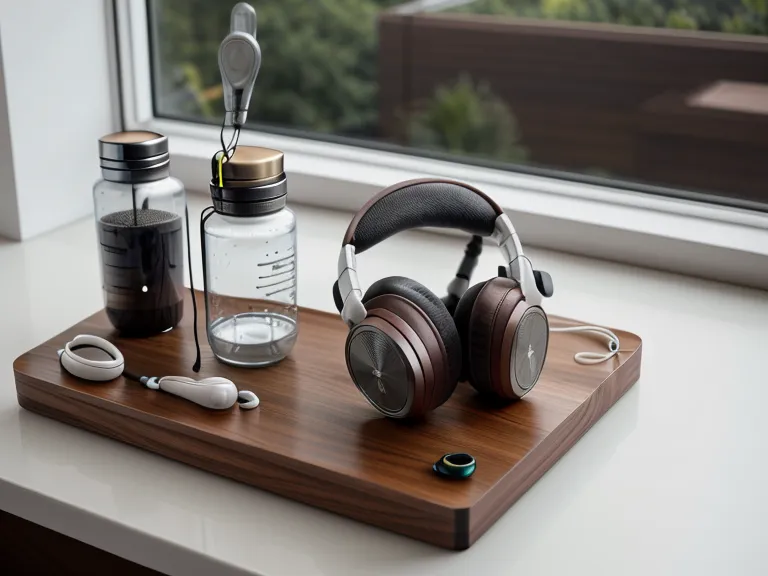
The Brain Song was the strangest thing I added to the sheet, mostly because it isn't swallowed at all — it's an audio-based approach, about as far from a tea bag as a product can get. Skepticism is basically my resting state, so I tracked it exactly like everything else: same test, same time of day, same blank spreadsheet row waiting to be filled in. NeuroPrime sat at the other extreme — a traditional capsule, premium price tag, the kind of product that appeals to someone who still wants a bottle on the counter instead of a pair of headphones. Running both against my tea baseline, the pattern that showed up had nothing to do with unconventional versus conventional and everything to do with consistency — whichever one I actually used every single day moved the numbers, and the one I was inconsistent with didn't.
A neighbor of mine, who plays pickleball at the Allen Community Center most mornings, asked me once why I bother with headphones instead of just drinking more green tea for the caffeine. Fair question — caffeine and a steeped herb aren't nothing, they do something for alertness in the short window right after you drink them, but that's a different column on the sheet than sustained recall, and mixing the two up is how people end up disappointed with both.
Should You Track Tea the Same Way You Track a Supplement?
Yes, if you want an answer instead of an impression. I run the identical test on tea days and capsule days alike: same three recall prompts, same time of day, same method for scoring whether a word came back cleanly or I had to work for it. I wrote more about the difference between memory and focus support elsewhere, because conflating the two is how a lot of home testing goes sideways.
Three capsules dry-chased with water that's lost its chill still catch at the back of my throat every single time, which is a small, almost comic contrast to five quiet minutes of actually tasting a cup of tea — but neither experience tells you anything about the result. Only the scorecard does. If you can't score tea and a supplement on the same scale, you can't honestly compare them, so build one scorecard, not two.

Tea Earns a Permanent Spot; the Supplement Does the Heavy Lifting
Tea isn't going anywhere in my kitchen — it's a genuinely pleasant five minutes, and I'm not interested in auditing every last pleasure out of my own morning. The Genius Song has earned a steady spot in the rotation for days when I want the audio approach without reaching for a capsule at all, and my specific ingredients notes, caffeine included, live in a separate tab I update every time I add something new to the sheet. None of that changes the verdict: for an actual, trackable shift in recall or focus, a concentrated supplement outperforms a tea bag every time I've measured it, and the tea stays on the ledger as a cost, not an investment.
If you're starting from scratch, The Brain Song is the easiest on-ramp if an audio-based routine appeals to you more than another capsule, and Neuro-Thrive is the steadier, more conventional pick if you'd rather stick with something you swallow. Either way, keep your own scorecard — it's the only part of this whole exercise I'd call non-negotiable.
| Product | Rating | |
|---|---|---|
| The Brain Song Top Pick for Focus | 9.2 | Read More → |
| The Genius Song | 8.9 | Read More → |
| NeuroPrime | 8.5 | Read More → |
| Neuro-Thrive | 8.7 | Read More → |
The Brain Song
Pros
- ● Unique audio-frequency approach that bypasses digestive absorption issues
- ● Massive market validation with a high gravity score on major platforms
- ● Very accessible price point for a daily cognitive maintenance tool
- ● Zero prep time compared to steeping herbal teas
Cons
- ✘ Requires consistent daily listening time to see spreadsheet-measurable results
- ✘ The concept might feel 'woo-woo' to traditional numbers-oriented people at first