
A silent room and a loud coffee shop don't sound like they'd produce the same kind of focus, but on my numbers, they can — it depends entirely on what you're asking your brain to do that day. Decades of adding up other people's numbers taught me to distrust one-size-fits-all advice, and most natural ways to improve focus that circulate online treat brain health after fifty like a single problem with one fix, usually sold in a bottle. It isn't that simple. Cognitive tracking on my end says you're really choosing between two different columns on the ledger: change what's happening around you, or change what's going into you with natural supplements — and nobody selling the second option wants to admit the answer depends on which column is already out of balance.
I built a spreadsheet to settle the argument with myself, and now it eats more of my week than actual accounting ever did — which either says something about brain supplements or something about my hobbies, and I'm still not sure which column that belongs in.
Environment or Ingredient — Which Builds Focus First?
Picture two retirees with the identical complaint — words sliding out of reach mid-sentence, a forty-minute meeting stretching to an hour because attention keeps slipping off the page. One of them decides the fix lives in the room: better light, deliberate movement, quiet or noise tuned on purpose. The other decides the fix lives in a bottle: an amino acid here, an old herb there. Both are reasonable bets. Only one of them is usually free.
Circulation matters more than most people expect, and it doesn't require anything you'd need a receipt for. A loop around Klyde Warren Park most mornings does more for my early-afternoon attention than any bottle on my shelf — I can't tell you the exact reason why, and I've decided I don't need to; my job here is tracking outcomes, not writing the biology textbook.
A neighbor of mine treats Thursday night poker with his church group as non-negotiable, cards on the table every single week no matter what else is going on — and he stays remarkably sharp for it, quicker to remember names and numbers than plenty of men years younger. I don't think it's the cards. I think it's the standing appointment, the same way my morning walk works less because of the exercise itself and more because it never gets skipped.
I've written before about Natural Ways to Clear Brain Fog During Complex Financial Tasks, and the environmental fixes covered there are close cousins of what I'm weighing here — the difference is that today I'm putting them head-to-head against the supplement side of the ledger instead of treating them as the whole solution.

Silence Isn't Always the Answer
Most generic advice tells you to eliminate every distraction to focus — turn off the television, silence the phone, sit in a bare room with your ledger and nothing else. I tried exactly that. It was a disaster. Total silence turned out to create its own kind of static, a sensory vacuum with no friction to keep a wandering mind on the page.
Structured background noise did the opposite of what I expected. A coffee-shop hum or a low, even frequency in the room made my longer sessions run noticeably longer before my attention gave out, and it seemed to work by absorbing the sharp, sudden stuff — a lawnmower starting up, a siren two streets over — before it could yank my focus sideways. Silence has no buffer for that. Structured noise does.
The afternoon dip is its own separate audit, and I've broken the supplement side of that particular slump down elsewhere in more detail than fits here. Word-retrieval trouble — reaching for a name and coming up empty — is a related but distinct problem too, one I've tracked on its own terms rather than folding it into general focus.
The Coffee-Shop Hum vs. the Library Hush
Silence wins when the task is precise and short — reconciling a single column of figures, proofreading a paragraph you need exactly right. There's no ambient information to filter out, so nothing competes with the one thing you're doing. The cost is that your own mind becomes the distraction, and for retirees especially, a mind with fewer external appointments will happily go looking for something to chew on.
Noise wins when the task is longer and less exacting — reading, planning, the kind of sustained low-stakes work that used to fill an office day. It gives the brain something steady to lean against, so a single sharp interruption doesn't feel like the whole session collapsing. The cost is that you can't fully control it in a real coffee shop, and a bad table near the espresso machine can undo the whole benefit in about ninety seconds.
Natural Supplements: A Fast Pairing Against a Slow Burn
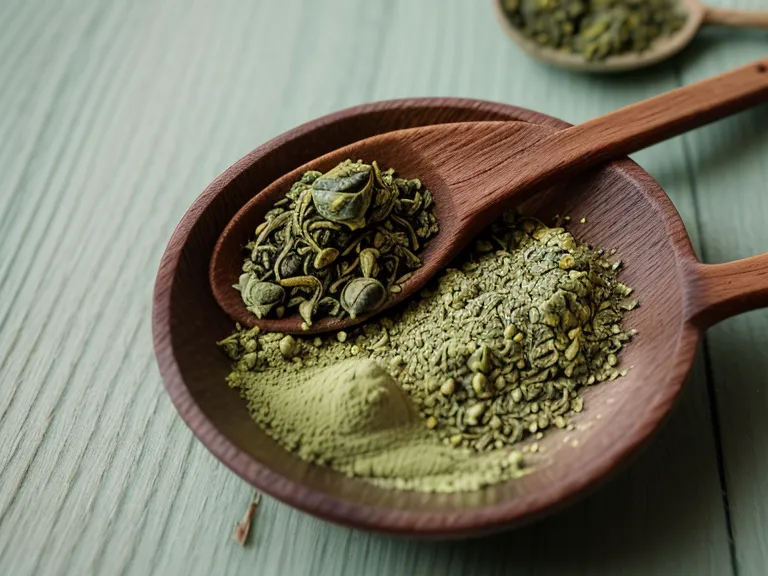
L-Theanine pairs naturally with caffeine, which made it the obvious starting point since I wasn't willing to give up my morning coffee to test any of this. L-Theanine is an amino acid most commonly associated with green tea, and the pairing is meant to take the jitters and the crash out of a caffeine dose without dulling the alertness. On my own log, that's roughly what happened — fewer spikes, fewer afternoon crashes, a flatter and steadier line.
Then there's Bacopa monnieri — a different animal entirely. Bacopa monnieri is a perennial herb with a long history of use, and it does not behave like caffeine at all — it's a slow-compounding asset rather than a quick dividend, and treating it like a fast fix is exactly why a lot of people give up on it before it has a chance to do anything.
Patience is the entire price of admission here. There's no shortcut version.
Caffeine used to paper over my afternoon dip back when a set schedule forced the issue — a two o'clock call, a client waiting on a number. Retirement took the fixed schedule away entirely, and that confound looks completely different on a day with no calendar making you reach for a cup on cue, which is most of why I broke the caffeine question out into its own piece, Caffeine vs. Natural Supplements: What My Morning Data Reveals.
Label claims on a supplement bottle rarely matched what my own results actually showed, and I've documented that particular mismatch elsewhere rather than relitigating it here. The short version is that a jar can say almost anything it wants about focus, and your spreadsheet is the only auditor that will ever check its work.
Whether either supplement is worth its ongoing cost is a full return-on-investment question I've already broken down in more depth than fits in one section, and I can't rule out that some of what felt like Bacopa working was just my own expectation doing the heavy lifting — a placebo baseline is its own audit question, and a fair one to ask of every bottle on the shelf.
How I actually structure the spreadsheet columns to catch that kind of self-deception is a separate topic on its own, and so is the full taxonomy of which natural compounds belong in which category. Sleep quality is yet another variable that can quietly wreck a supplement test before it even starts, and that one gets a ledger of its own. The eye-strain is the part nobody warns you about — a couple of hours holding a supplement label up against a research abstract, checking whether the two are even describing the same dose, leaves a particular ache behind the eyes that no amount of coffee fixes.
Does Stacking Everything Actually Win?
Stacking isn't automatically better, no matter how tempting it is to throw every variable at the problem at once and call it a diversified approach. In my experience the combination only shows itself once the individual pieces are already pulling their weight on their own — one underperforming line doesn't sink a portfolio, but a portfolio made entirely of underperforming lines definitely will.
Not everything I tried earned a permanent place in that stack. I kept a Lumosity subscription running for four months before I canceled it — the games themselves got easier week over week, which felt like progress, but none of that ease ever carried over into an actual afternoon at my desk. That's the only number that ever mattered to me, and it came back negative.
A crossword gave the game away eventually. I finished one in under fifteen minutes not long back without looking a single answer up, and the strange part wasn't the puzzle — it was that I didn't even register I'd done it until my wife asked what I was grinning about over coffee.
One structured program worth a mention here combined auditory input with natural ingredients, and I wrote up the results in The Brain Song Review: My Data-Backed Verdict on Everyday Focus. It helped, but only as an addition to habits that were already in decent shape — no program, however well designed, fixes a 3 a.m. bedtime or a diet of vending-machine snacks. That's just bad accounting, dressed up as a supplement problem.
Choosing Your Starting Column
If your sleep, hydration, and daily movement are already reasonably balanced — those columns squared away without much drama — start on the ingredient side of the ledger: a theanine-caffeine pairing if you're still a coffee drinker, Bacopa if you're willing to wait out a slower return. But if your days have no real structure left in them, no fixed wake time, no standing reason to leave the house, fix that column first. Layering a supplement on top of a chaotic routine is like buying inventory for a business with no bookkeeping behind it — you'll never know what actually worked, and neither will your spreadsheet.
Talk to an actual physician before changing anything, especially if you're already on medication — I spent a long career making other people's numbers add up, and not one of those years involved a medical license. What I can tell you is that the natural ways to improve focus worth pursuing after retirement usually aren't the ones promising the single biggest jump. They're the ones that hold up, column after column, once you actually bother to check.