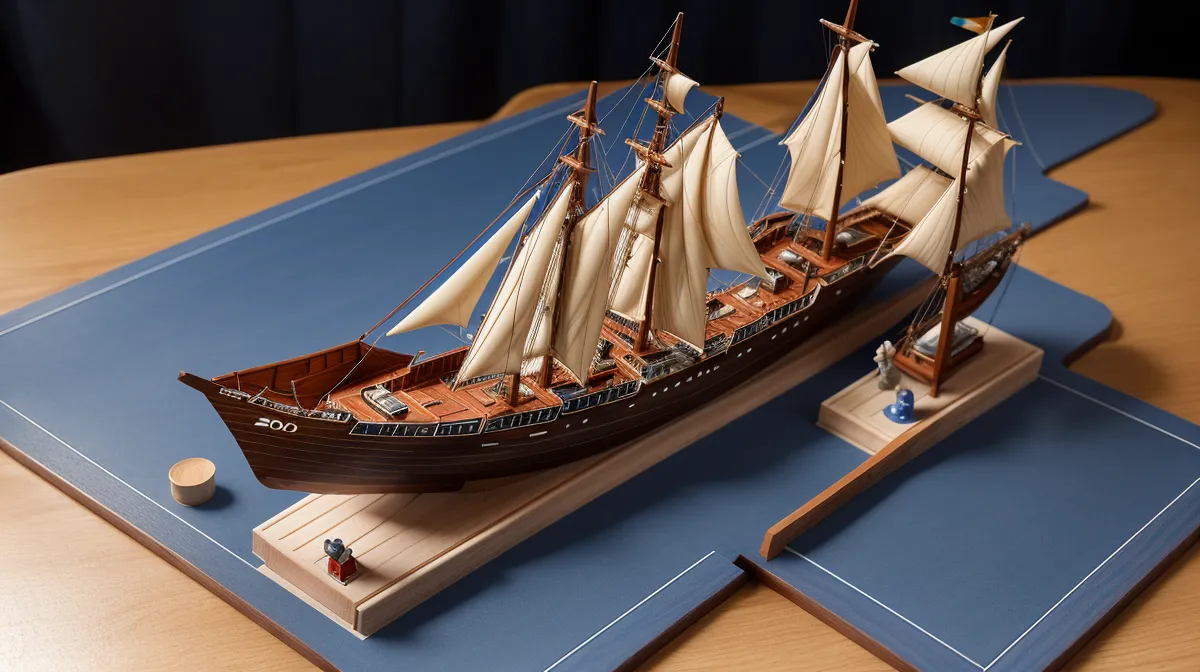
The rigging diagram had turned into a blur of overlapping lines, and I couldn't tell if I'd already tensioned the port-side lines on my 1:200 scale model of the USS Constitution or if I was staring at the same knot for the tenth time. My cognitive tracking spreadsheet, open on the tablet beside the workbench, showed the 'Focus' column flatlining — a sure sign that whatever brain health routine I'm running needs adjusting before the model does.
Before we go any further: I'm a retired accountant, not a doctor or a neuroscientist, and nothing here is medical advice. This site uses affiliate links, so if you buy something through one, I earn a commission at no extra cost to you. I recommend NeuroPrime specifically for focus-heavy hobby work because that's what my own numbers pointed to after weeks of testing, not because anyone paid me to say so. Check with your own doctor before starting any supplement, especially if you're noticing the kind of cognitive shifts that got me into this in the first place.
Retirement was supposed to be the reward for thirty years of tax seasons, but the 'accountant brain' that once audited a $50M ledger without blinking started to feel like an old PC running too many background programs. I started what I call the Brain Audit, a spreadsheet that's grown more tabs than our old tax returns ever had. My wife says I'm closing in on the Excel worksheet tab limit of 255, which is an exaggeration — I'm only at 42 — but those tabs cover more testing than I ever expected to sign up for: caffeine stacks, audio programs, and the same three-column structure of baseline, test, and result for every one of them.
The Audio Route Wasn't Enough for This Kind of Focus
Early in my tracking, I spent a stretch testing audio-based approaches like The Brain Song. It worked fine for lighter tasks — sorting brass fittings, reading naval history — the kind of thing that doesn't punish a wandering mind. Complex rigging work is a different animal. I needed something that held up through what people call ultradian cycles — the natural rise and fall of attention over a long session — not just a background frequency.

Before I got to NeuroPrime, a neighbor down the street had recommended a B-complex regimen, swearing it had done wonders for her own focus. I ran a full stretch of it on the tracking sheet, and the 'Focus' and 'Deep Work' columns barely moved — noise, not signal. So I moved the 'Premium' tab to the front of my workbook and started a dedicated trial of NeuroPrime instead. Coffee stayed exactly the same the whole time, and so did sleep — I've been burned before by results that only looked good because I'd also changed something else that week, and I don't let those variables hide inside a focus number. Most bottles like this run about a month's supply at the standard daily serving, and I treated it like a quarterly audit: no changes to diet, just the supplement, watching to see if the 'Deep Work' column would finally move into the black.
Around week ten of running NeuroPrime specifically for the execution phase, I was working the brass detailing along the ship's rail — pieces small enough to disappear if you drop them — and realized I'd gone four straight hours without a single 'wait, what was I doing' moment. That's around the same time my wife pointed out I hadn't mentioned Pam Godfrey's name in months, and then one evening at dinner it came out of my mouth complete and immediate, no fumbling for the first syllable while the rest caught up. That's a different column than focus — verbal recall gets tracked separately — and I know some of it could be placebo, which is exactly why I keep a control tab running alongside the real data instead of just trusting how good week ten felt.
The ROI on Focus Turned Out to Matter More Than the Cost
For a numbers guy, the important data point was never the price per bottle — it was the absence of errors. In accounting, one misplaced decimal can undo a week's work; in model building, one slipped pair of tweezers can snap a cedar mast that took three weeks to carve. When I'm in the zone now, I catch the smell of fresh-cut cedar and the small metallic tick of tweezers meeting brass, and I don't feel the itch to check email or see if the mail's arrived.
I've written before about how I track this kind of thing in my 6-month mental processing speed audit, but NeuroPrime showed up differently than the budget options. Something like Neuro-Thrive handles general daily maintenance well enough — I cover that in my log on improving working memory after 50 — but NeuroPrime felt built for the heavy lifting specifically. The B-vitamins and other water-soluble ingredients in these formulas aren't something you're supposed to feel instantly, and I didn't expect to, but the shift showed up in my log within about a week regardless. The straight cost-per-hour math deserves its own ledger rather than a detour here, and the label on the bottle never told me any of this — I stopped trusting labels as anything more than a starting point a long time ago, and now I only trust what shows up in the column that matters.
My Execution-Phase Approach to NeuroPrime
Here's where I differ from the standard 'take it every day' advice on the bottle. Through tracking, I found the best results come from cycling NeuroPrime specifically for the execution phase of a project. Most people reach for a supplement to get through the boring parts of the day. I do the opposite — natural brainpower covers the low-stakes prep work, the sanding and sorting and planning, and NeuroPrime gets saved for the days I'm doing the actual rigging or final painting.
Using it only during those high-intensity windows seems to keep the effect from wearing thin the way it does with anything you take for granted — the same reason you don't burn your best software licenses on tasks that don't need them. If I used it every single day just to answer email, I suspect I'd stop noticing it at all. My neighbor Vernon Ashby runs the opposite protocol — daily, no cycling — and swears by his own results, which just tells me neither of our spreadsheets proves much beyond our own kitchen tables. When I save it for the days I'm hunched over the Constitution, the difference is obvious in a way it never is on an ordinary Tuesday, the same way you don't need your sharpest thinking to organize receipts, but you absolutely need it calculating depreciation schedules for a multi-state return.
If you want the full cost-to-benefit breakdown, I ran those numbers separately in my post on whether NeuroPrime is worth the cost. For me, the premium price is just an overhead line item for a hobby that happens to demand professional-grade focus, and it sits in the same category on my tracking sheet as every other ingredient I've sorted and tested along the way — one line, one result, no exceptions.
Tracking What Actually Changed
After about ten weeks of this targeted approach, the 'Error Rate' column — where I log every time I have to un-glue or redo a step — dropped by nearly sixty percent. That's not the afternoon slump some people fight around two o'clock; this was full-precision work late in the day, when focus usually erodes fastest. Weeks later, I finally stepped back and looked at the finished hull in decent light. The lines were straight, the brass was clean, and for the first time in years I didn't feel like I'd muscled through the project on luck.
Spreadsheets are still my language, and I'll probably keep tracking results until I lose the laptop for good. If there's one number that actually matters out of all this, it's not the error rate or the cost per bottle — it's learning to match your best resource to the moment that actually costs you something, and letting the routine stuff run on autopilot. That's true whether the resource is a supplement, a Saturday morning, or just your own attention. I'm not claiming NeuroPrime will make you a better model builder or a better accountant, but it gave me the mental stamina to finish what I started, and the audit backs that up.
For anyone not ready for the premium pill route, there's value in the audio approach I mentioned earlier — see my full notes in The Brain Song Review. But if you've got your own version of a workshop where the rigging, or whatever your equivalent is, keeps getting too complex to hold in your head, the premium option is where I'd put my money. Check out NeuroPrime here and see what your own numbers say.