
Staring at a massive personal spreadsheet late one evening, the cells of my family trust project began to blur into a gray wall of data I could no longer parse. It was a familiar, frustrating sensation—like trying to run a modern accounting suite on a laptop from 2005. The hardware was there, but the processing power was lagging, and for someone who spent 30 years making sure every penny found its home, this mental 'system crash' was unacceptable.
Before we go any further, I need to be clear: I am not a doctor, a neuroscientist, or a health professional. I am just a guy who spent three decades auditing corporate books and now audits his own brain health with the same obsessive level of detail. This site uses affiliate links, which means if you buy something through these links, I earn a commission at no extra cost to you. I only recommend products I have personally tested and logged in my tracking files. You should definitely talk to your own doctor before starting any new cognitive routine, especially if your 'mental software' is acting up.
The Audit: Why a Numbers Guy Turned to Audio
I spent my career handling the standard IRS Form 1040 line items—all 85 of them—without breaking a sweat. But after I hit 55, the mental sharpness I built my career on started feeling unreliable. I took early retirement in suburban Dallas because I didn't want to be the guy who cost a client thousands because he forgot how to carry the one. My wife says my 'Brain Health' spreadsheet now has more tabs than our joint tax returns ever did, and she is right.
For 14 months, I have been testing everything. Most things failed the audit. I moved from traditional capsules to audio-based tools because my tracking showed a diminishing ROI on pills alone. I was looking for something that could handle the heavy lifting of complex projects—specifically, the restructuring of my family’s long-term financial plan. That is when I came across The Brain Song. With a market gravity score of 200+, it had the kind of 'market validation' I look for before I even open a new tab in my spreadsheet.
The Testing Period: Late Winter to Mid-August
I started my testing phase early last spring, right during the peak of tax season—force of habit, I suppose. I wanted to see if sound waves could do what supplements often couldn't: provide an immediate 'on-ramp' to deep work. The theory involves brainwave entrainment, using frequencies within the human hearing frequency range of 20 Hz to 20,000 Hz to nudge the brain into specific states.
I spent about six weeks of testing primarily focused on whether these tracks could keep me in the 'flow state' for more than twenty minutes. My tracking sheet has a column for 'Subjective Clarity' (1-10) and 'Time to Task Fatigue.' Usually, by the two-hour mark of looking at amortizations, I’m ready for a nap. I began integrating The Genius Song into my rotation, noting its high popularity with a conversion rate of 1.43% among users—a metric I interpret as a sign that it’s actually moving the needle for people.
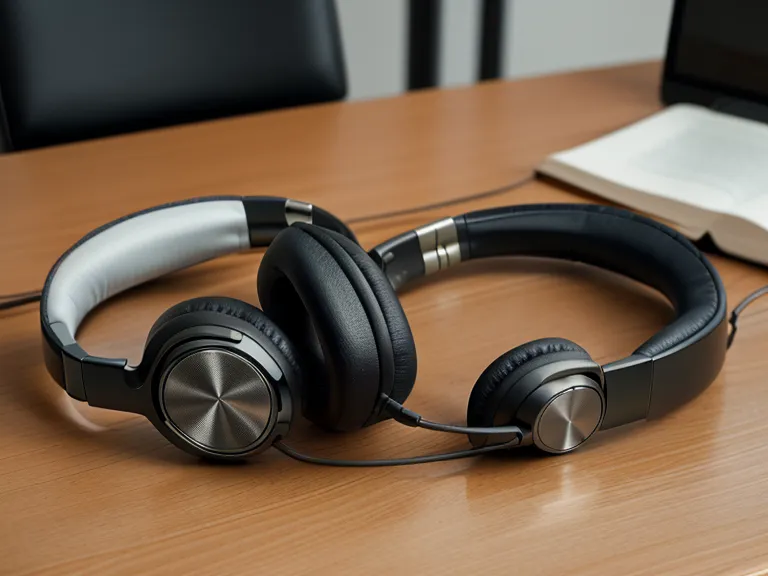
During these sessions, I’d sit in my Dallas home office. The low, rhythmic hum of the Dallas AC unit vibrating against the desk while the audio pulses through my headphones became my new working environment. It was a strange contrast—the mechanical drone of the house vs. the engineered frequencies in my ears.
The Mid-August Breakthrough
The real 'audit' happened on a humid afternoon in mid-August. I was deep into a three-hour session of complex financial restructuring. Usually, this is where the mental fog sets in—that thick, gray feeling where you read the same line three times. Suddenly, I noticed a cooling sensation in my temples when the mental 'fog' finally cleared during a particularly dense audit of my own records. It wasn't a caffeine jolt; it was more like my brain had finally cleared its cache and was running a clean script.
I realized I had navigated the entire restructuring without a single mental 'system crash.' When I checked my spreadsheet later, my 'Clarity' score for that session was a 9.2. For a retired accountant, that is a significant margin of improvement. You can see What My Spreadsheet Taught Me About the Difference Between Memory and Focus Support to see how I separate these variables, but the takeaway was clear: the audio was doing something the capsules weren't.

The Dependency Loop: A Risk Assessment
Now, here is the 'red flag' I found in my data, and it is something most people won't tell you. Using a tool like this for complex projects can create what I call a 'dependency loop.' In my notes, I started seeing a pattern: on days I didn't use the audio, my baseline focus actually seemed lower than before I started. It’s as if my brain lost the ability to enter deep work states without this exogenous stimulation.
It is like relying on a specialized Excel macro to do all your formatting. If you don't have the macro, you forget how to do it manually. I’ve had to be very careful to balance my inputs. I don't use it for every small task—only for the 'high-audit' projects that require maximum CPU. If you're interested in how I balance different tools, you might find my look at My Tracking Spreadsheet vs. Brain Fog helpful for comparison.
Final Data Points and Recommendations
After months of tracking, the ROI on audio-cognitive tools like The Genius Song is higher than I expected, provided you manage the dependency risk. It’s not a magic pill—or a magic sound—but it acts as a reliable lubricant for the mental gears when they start to grind. The current price for these programs can change, so you'll want to check the vendor's page for the most up-to-date figures.
If you are struggling with complex projects and your current 'balance sheet' of supplements isn't adding up, looking into an audio-based approach might be the audit your brain needs. I personally found that The Brain Song provided the most consistent 'output' for my daily needs, while the more intense tracks were saved for the quarterly reviews. Just remember to track your own results; as I always say, the spreadsheet doesn't lie. If you're seeing a fade by mid-day, you might want to read about Why My Brain Faded by Mid-Afternoon to see if it's a timing issue rather than a tool issue.

In the end, for a numbers guy like me, the most unconventional solution turned out to be the most measurable. My brain might not be the high-speed server it was in the 90s, but with the right 'software updates' and a lot of tracking, I'm still keeping the books balanced. If you're ready to see if your mental clarity can pass its next audit, you can check out the program I’ve been using here: The Brain Song.