
My mornings and my afternoons might as well belong to two different men, at least on paper. One version of me can recall a client's account number without blinking. The other, still the same guy on the same day, loses a grocery list before the second aisle. This is a side-by-side comparison of two different ways I tried to close that gap, tested against each other instead of against nothing.
Quick disclosure before the numbers: some of the links below are affiliate links, and this site earns a commission if you click through and buy something, at no extra cost to you. I don't get paid more for pushing one product over another, and I'm not a doctor or any kind of health professional — just a retired accountant who got nervous about his own memory and started treating it like an audit. Talk to an actual doctor before you change anything about your own health.
Two Ledgers, Same Brain: Tracking Morning Focus vs. Afternoon Focus
I didn't set out to become the guy with a brain-health-tracking spreadsheet. I left the accounting world earlier than planned, well before the standard retirement age most of my old clients were aiming for, because I'd forgotten the same client's name mid-meeting three separate times in one quarter and couldn't keep pretending that was normal.
The workbook I built has a row for every test I've run over about a year of doing this — sleep, caffeine, mood, and whichever supplement or approach I was auditing that stretch. Excel technically allows 1,048,576 rows per sheet, a limit I have not come close to threatening, though my wife insists my hobby is working on it.
My neighbor Pam Godfrey has an infuriatingly sharp memory for exactly this kind of detail — she once recalled the color of a mailbox flag from a conversation two months earlier, and losing that argument is part of why my columns got more disciplined about logging failures instead of just successes.
Most of what gets written about nootropics data is aimed at one generic reader, but the pattern I care about — staying sharp as a senior through a full day, not just a full morning — only shows up once you separate the two halves of the day and compare them honestly instead of averaging them together.
What Actually Explains the Afternoon Drop-Off?
By whatever measure I used — word recall, a timed focus drill, how many items I could hold in my head at once — the same cliff showed up every day, usually within an hour of lunch.
It didn't matter what I ate. A raw kale-and-blueberry smoothie every weekday morning was supposed to fix this outright, and I kept at it for a good while before admitting the afternoon numbers never moved — a nice habit and a useless variable, as far as my spreadsheet was concerned.
Caffeine timing got its own column before I blamed any supplement, since a coffee at 2 PM can fake a recovery that vanishes an hour later. Sleep quality got tracked separately too — a bad night wrecks the afternoon numbers no matter what capsule I swallowed that morning, and that particular audit deserves its own space rather than a paragraph here. I also built in a rough placebo baseline for myself, the accountant's version of asking whether a number moved because something worked or because I wanted it to. What was left, after subtracting caffeine and sleep and the smoothie experiment, looked less like a missing nutrient and more like a timing problem — sharp in the morning, somewhere else by early afternoon, like a prefrontal cortex that clocks out for a while.
NeuroPrime seemed like a reasonable place to start testing an actual fix, so I picked up a bottle of NeuroPrime and took it every morning the way the label recommends.
Testing a Capsule Approach Against an Audio Approach, Head to Head
Before I get to results, one pointer: I'd already been reading about frequency-based approaches as a completely different category from capsules, and I go deeper into that specific question in Does The Brain Song Help Clear Brain Fog After Retirement? if you want the fuller version.
Two products anchored this specific comparison: a second capsule option, The Genius Song, run through the same morning slot as a cross-check, and an audio track, The Brain Song, run specifically in the afternoon window instead. I tested them back to back rather than months apart, mostly because spacing them out any other way makes it too easy to credit the wrong variable for a decent stretch — how you sequence a fair comparison is worth its own writeup, and I've gone deeper on that elsewhere. Reading a capsule label is its own small project, too: there's a real difference between a single ingredient and a blend with a dozen things listed, and sorting through that is a separate exercise I won't repeat here. What matters for this comparison is simpler. Both capsules raised my morning numbers, the kind of lift that would look great on a slide, and did close to nothing for the afternoon column — a clean example of the gap between what a label promises and what a spreadsheet actually shows.
Vernon Ashby, a neighbor two blocks away, started his own informal version of this after we got to talking by the mailboxes, and he'll insist a product worked or didn't with total conviction — he just doesn't log anything consistently enough to say why, so his conclusions and mine rarely match even when we're taking the same thing. It's the clearest argument I've got for writing everything down instead of trusting a gut feeling about your own brain.
Where the Two Approaches Actually Diverge
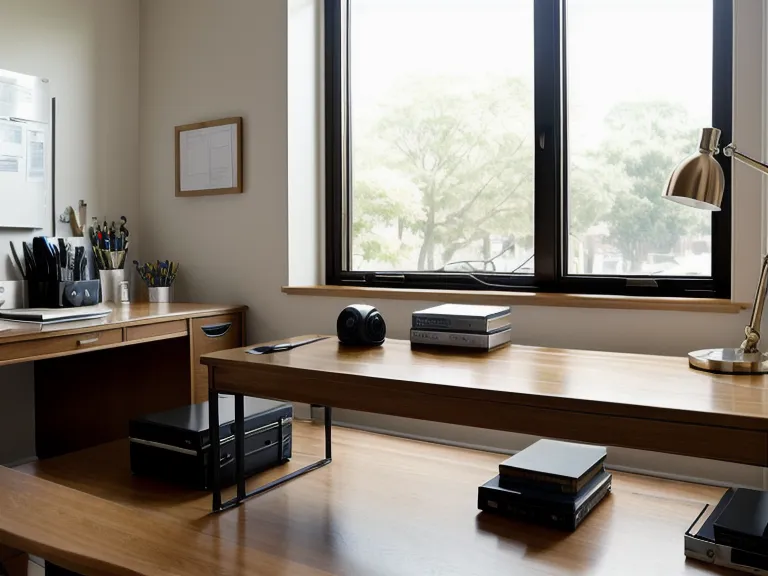
Swallowing three capsules with a glass of room-temperature water leaves a dry, chalky catch at the back of your throat that lingers for a minute. With the audio track, headphones on at the same desk where the spreadsheet lives, an oak-veneer hand-me-down from my old accounting days under a whiteboard I've mostly filled with half-finished ingredient notes, there's nothing left afterward except whatever the numbers say next.
One exchange with my wife has stuck with me more than any single row in the spreadsheet. She brought up a neighbor's name at dinner — someone I genuinely hadn't thought about in months — and the whole context came back at once instead of piecing together after an awkward pause: where we'd met them, what they'd said last time. That kind of complete, immediate recall used to be a morning-only event for me. On the audio afternoons, it wasn't. That's the same verbal-recall pattern I track as its own column separate from general focus, and it gets a full write-up of its own elsewhere — here it's one data point in a bigger comparison.
A few other columns move in the background of all this. Working memory gets tracked separately from simple recall, since holding several things in your head at once is a different skill than remembering one thing later. Stress shows up as its own confound — a rough stretch at home drags down an afternoon score regardless of what got tested that morning. Processing speed, meaning how fast I get through a page rather than whether I remember it after, was the column that moved the most on audio afternoons. And separating ordinary aging from something that actually needs a doctor's attention is a bigger, more careful question than a product comparison can answer, one I'd rather point toward than try to settle here.
For anyone who wants just these two numbers stacked directly against each other on recall specifically, without the rest of this comparison around them, I put that together separately in NeuroPrime vs Brain Song for Better Name Recall and Memory.
The Rule I'd Actually Give Someone Asking
If the problem is a slow, foggy start to the day, a morning capsule is the more direct fix — that's exactly the window NeuroPrime and The Genius Song are built for, and my own numbers back that up plainly. If the problem shows up after lunch, once the morning side of the ledger is already reasonably balanced, that's the specific gap this whole comparison was built to close, and The Brain Song did more for that window than anything else I ran through the same stretch of months. Match the tool to the hour it's actually failing you instead of buying the same fix twice.
Run the return the way you'd run any other expense, too — track what actually changed against what you're spending on it every month, not against what the label promised on day one.
None of this replaces an actual medical opinion. If your memory issues feel like more than a timing problem — if the books feel permanently cooked, not just unbalanced by mid-afternoon — go see a professional instead of reading another spreadsheet story from a stranger on the internet. I've also broken down what this whole stretch of testing has cost against what actually changed, if you want the fuller accounting: My Spreadsheet's Verdict on Brain Health: A Retired Accountant's Monthly Breakdown.
For the afternoon column specifically, the audio approach is what I'd point you toward first, since it was built for that window rather than adapted to it after the fact: The Brain Song. Run your own version of this comparison before deciding anything — your ledger won't match mine exactly, but testing one approach against another, in the same stretch of time, holds up no matter which one wins in your particular columns.